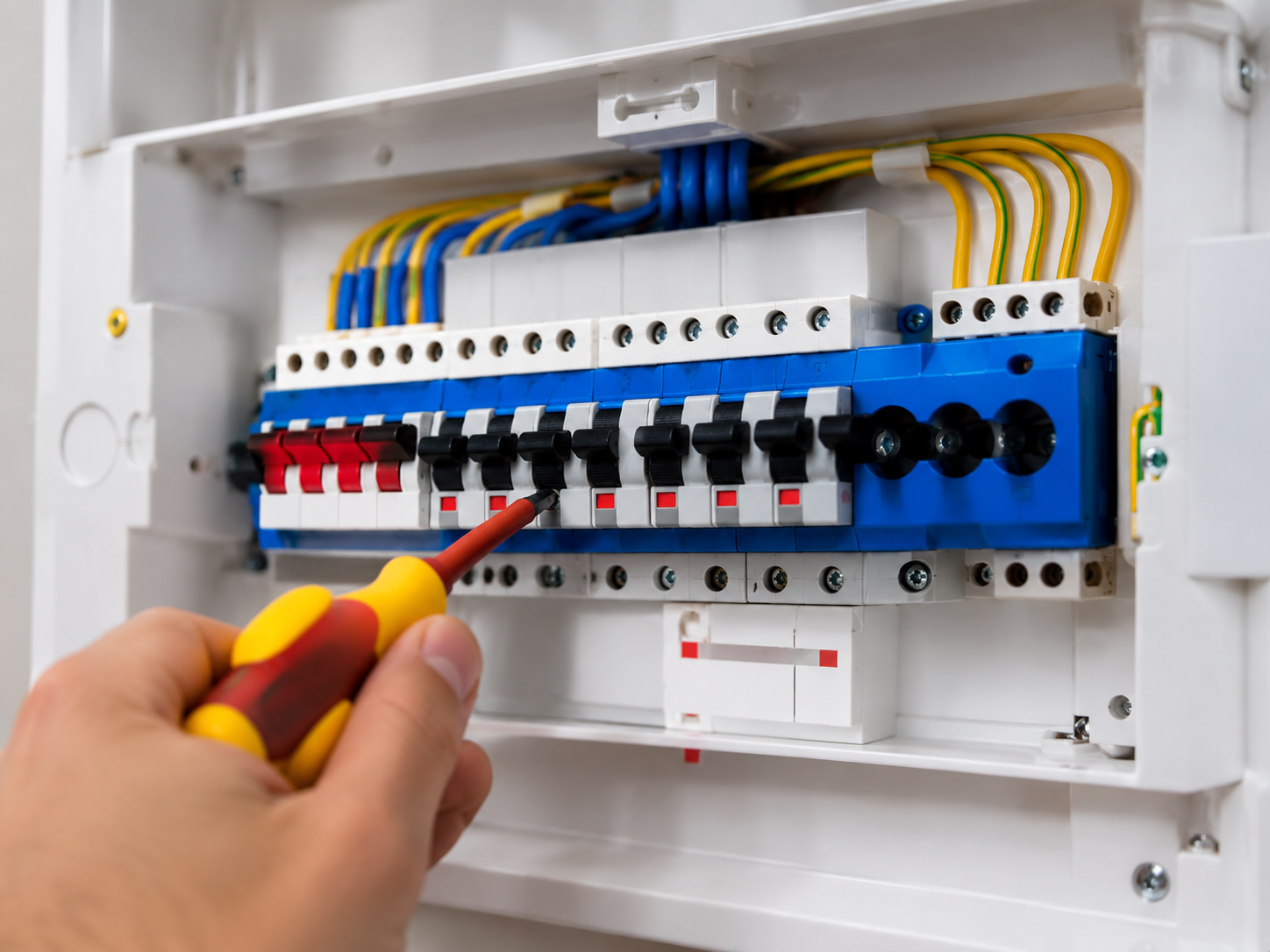
Your consumer unit is at the heart of your home’s electrical installation. It distributes electricity around the property and contains the protective devices designed to disconnect circuits when something goes wrong.
But consumer units can remain in homes for decades, and electrical standards, technology and the way we use electricity have changed considerably during that time.
So, does an older consumer unit automatically need replacing?
Not necessarily.
The age or appearance of a consumer unit alone does not tell you whether it is unsafe. Older installations can continue to provide satisfactory service, while newer installations can still develop faults or defects.
What matters is the condition of the installation, the protection currently provided and whether it remains suitable for the way electricity is being used in your home.
J2B Electrical provides professional consumer unit upgrades across Fareham, Southampton, Portsmouth, Whiteley, Park Gate, Warsash, Wickham, Waterlooville and surrounding areas.
What is a consumer unit?
A consumer unit is sometimes still referred to as a fuse box.
It is usually the point at which the electricity entering your home is divided into individual circuits. These might include your lighting, sockets, cooker, shower, heating equipment, EV charger and other electrical systems.
Inside the consumer unit are protective devices designed to disconnect electricity when particular electrical faults occur.
Older installations may use traditional fuses or earlier types of circuit breaker, while modern consumer units typically incorporate more sophisticated protection.
Does an old consumer unit automatically need replacing?
No.
This is an important distinction.
Electrical Safety First guidance states that an older consumer unit does not necessarily require replacement simply because it contains rewireable fuses, cartridge fuses, older circuit breakers or because its enclosure is made from plastic. Electrical Safety First
An electrician should consider the overall condition of the electrical installation rather than recommending replacement based purely on age.
If you are concerned about your consumer unit, an inspection can determine whether it remains suitable or whether upgrading would improve the safety and protection of the installation.
An Electrical Installation Condition Report, or EICR, can be particularly useful where the condition of the wider electrical installation is unknown.
What are the signs that a consumer unit should be checked?
There are several circumstances where it is sensible to have your consumer unit assessed.
These include visible damage, scorching or discolouration, signs of overheating, unusual noises, circuits that regularly trip, damaged components or an installation where the available protection appears limited.
Electrical Safety First specifically advises householders to look for physical damage, thermal damage and discolouration around older consumer units. Electrical Safety First
You should not open or dismantle the consumer unit yourself to investigate a problem. If something does not look right, arrange for a qualified electrician to inspect it.
What protection does a modern consumer unit provide?
Modern consumer units are designed to provide much more comprehensive protection than many older installations.
One important element is RCD protection.
An RCD, or residual current device, monitors the electrical current flowing through a circuit and can disconnect the electricity extremely quickly when certain types of fault are detected.
Current wiring requirements mean RCD protection is now used extensively throughout domestic electrical installations. For example, the IET confirms that domestic lighting circuits require additional 30 mA RCD protection when they are newly installed or significantly altered. IET Wiring Regulations
Modern consumer units can also use RCBOs, which provide individual circuit protection and residual current protection within one device.
This approach means that a fault affecting one circuit does not necessarily disconnect several unrelated circuits at the same time.
Why are modern consumer units made from metal?
Current requirements for domestic consumer units include the use of enclosures manufactured from non combustible materials, which in practice generally means metal consumer units.
These requirements were originally introduced to help reduce the risk associated with fires developing within consumer units and similar switchgear.
The IET confirms that domestic consumer units should be manufactured from non combustible material or enclosed within a cabinet made from non combustible material. IET Wiring Regulations
However, this does not mean that every existing plastic consumer unit must automatically be replaced.
The Wiring Regulations are not generally retrospective, and an older installation should be assessed on its actual condition and safety. Electrical Safety First
What is surge protection?
Modern homes contain more electronic equipment than ever before.
Televisions, computers, appliances, smart home equipment, heating controls and other electronics can potentially be affected by transient electrical overvoltages.
A surge protective device, usually referred to as an SPD, is designed to help protect an electrical installation and connected equipment against these voltage surges.
Current BS 7671 requirements give surge protection a much more significant role in modern electrical installations. The IET notes that surge protection now applies to all types of premises, including individual homes, subject to the requirements and assessment set out within the regulations. IET Wiring Regulations
When replacing a consumer unit, your electrician can advise on the appropriate surge protection for the property.
Has the electrical standard changed recently?
Yes.
The current consolidated edition of the UK Wiring Regulations is BS 7671:2018+A4:2026, commonly known as the 18th Edition Wiring Regulations with Amendment 4. The latest amendment took effect in April 2026. The IET Shop
An existing electrical installation does not automatically become unsafe simply because the regulations have subsequently changed.
However, when new electrical work is carried out, that work needs to comply with the requirements applicable to it.
Replacing a consumer unit counts as an alteration to the electrical installation, so the replacement work must be designed, installed and verified in accordance with the current requirements of BS 7671. Electrical Safety First
What happens before a consumer unit is replaced?
A responsible electrician should not simply remove the old consumer unit and connect everything to a new one without considering the condition of the existing installation.
Before replacement, the suitability of the existing circuits, electrical supply, earthing and bonding arrangements needs to be considered.
Electrical Safety First guidance states that a replacement consumer unit should not be fitted until it has been established that the existing equipment and the earthing and bonding arrangements are adequate for the proposed work. Electrical Safety First.
Testing can also reveal faults or defects within existing circuits. We always carry out a full EICR prior to changing a consumer unit and rectify any issues first.
This is important because a modern consumer unit may detect problems that an older fuse box was not capable of detecting.
Does replacing a consumer unit mean the whole house needs rewiring?
No.
A consumer unit replacement and a house rewire are completely different jobs.
Replacing the consumer unit does not automatically mean the wiring throughout the property needs to be replaced.
Existing circuits can often be connected to the new consumer unit where they are safe and suitable.
However, if testing identifies a circuit presenting immediate or potential danger, Electrical Safety First guidance states that it should not simply be reconnected to the replacement consumer unit. Electrical Safety First
Any problems identified should be explained to you before further work is undertaken.
J2B Electrical does not actively promote full house rewires, but we can assess your existing installation and advise clearly on any work that is genuinely required.
Can upgrading your consumer unit prepare your home for an EV charger?
It can.
The increasing use of EV chargers, solar panels, battery storage, electric heating and other higher demand electrical equipment means that many homes are using their electrical installations differently from when they were originally designed.
Electrical Safety First specifically recommends considering additional capacity for future technologies such as EV charging, solar PV and battery storage when selecting a replacement consumer unit. Electrical Safety First
If you are planning a home EV charger installation, we can assess the existing consumer unit and electrical supply as part of the installation process.
A consumer unit replacement is not automatically required for an EV charger, but where an upgrade is appropriate, planning the two pieces of work together can provide a cleaner and more future ready installation.
Is replacing a consumer unit notifiable electrical work?
Yes, in England the replacement of a consumer unit is notifiable work under Part P of the Building Regulations. Legislation.gov.uk
Where the work is completed by an electrician registered with an appropriate Competent Person Scheme, the installer can normally deal with the Building Regulations notification on your behalf. Government guidance confirms that registered installers can self certify compliant work and arrange the appropriate certification. GOV.UK
J2B Electrical is NAPIT registered, registration number 64925.
What certification should you receive?
Following a consumer unit replacement, the electrical work needs to be inspected and tested.
Electrical Safety First guidance confirms that an Electrical Installation Certificate should be issued following verification of a consumer unit replacement. Electrical Safety First
Where the work is notifiable under Part P, the appropriate Building Regulations compliance notification should also be dealt with.
Keep these documents somewhere safe. They provide an important record of the work completed at the property and can be useful when selling your home in the future.
How long does a consumer unit upgrade take?
The time required depends on the property, the number of circuits and the condition of the existing electrical installation.
Power will need to be disconnected while the consumer unit is replaced, after which the installation needs to be tested before the work is completed. On the day you should expect complete loss of power for around 4-5 hours.
A straightforward replacement can often be completed within a working day, but additional faults or remedial work discovered during testing can affect the time required. There will also be a pre visit to carry out the EICR included in the works.
We can give you a clearer indication once the existing installation has been assessed.
How much does a consumer unit upgrade cost?
There is no single price that applies to every home. On average a consumer unit fitted out with RCBOs and type 2 surge protection is between £650-£800.
The cost depends on factors including the number of circuits, the type of consumer unit and protective devices required, the condition of the existing installation and whether any additional remedial work is needed.
A small property with a straightforward installation may require a very different consumer unit from a larger home with multiple circuits, an EV charger, solar generation or other electrical equipment.
J2B Electrical can inspect your existing setup and provide a free, no obligation quotation based on the work actually required.
Should you upgrade your consumer unit?
If your existing consumer unit is safe, suitable and in good condition, replacing it simply because it looks old may not be necessary.
However, upgrading can be worth considering where the existing unit provides limited protection, damage or faults are present, major electrical work is planned, additional capacity is required, or you want to bring the protection within your home closer to current standards.
The key is to have the installation properly assessed rather than assuming that every old fuse box is dangerous or that every property automatically needs a new consumer unit. If you still have rewireable fuses or a lack of RCD protection, then in all cases an upgrade is recommended.
Consumer unit upgrades across Hampshire
J2B Electrical provides professional consumer unit upgrades throughout Fareham, Southampton, Portsmouth, Park Gate, Warsash, Whiteley, Wickham, Waterlooville and surrounding PO and SO postcode areas.
We are City & Guilds qualified and NAPIT registered, with more than 15 years of electrical industry experience.
All J2B Electrical workmanship is also covered by a two year labour warranty.
Thinking about upgrading your consumer unit?
If you are unsure whether your consumer unit needs replacing, J2B Electrical can assess the installation and give you straightforward advice.
If the existing unit remains suitable, we will explain that. If an upgrade would be beneficial, we can talk you through the options and provide a professional quotation.
Looking for a consumer unit electrician in Fareham, Southampton, Portsmouth or the surrounding Hampshire area?
Get in touch with J2B Electrical for friendly advice and a free, no obligation quote.
Frequently asked questions
Is a plastic consumer unit illegal?
No. An existing plastic consumer unit does not automatically become illegal or unsafe because modern replacement units use non combustible enclosures. Existing installations should be assessed according to their condition and the protection they provide. Electrical Safety First
Does an old fuse box need replacing?
Not necessarily. Traditional fuses or older circuit breakers can still provide overcurrent protection. An electrical inspection can establish whether the existing installation remains safe and suitable. Electrical Safety First
Will a new consumer unit stop electrical faults?
A modern consumer unit cannot prevent every electrical fault from occurring, but modern protective devices are designed to disconnect circuits when particular fault conditions are detected.
Do I need an EICR before replacing my consumer unit?
A separate EICR is automatically included in our pricing. We would not upgrade a consumer unit without carrying out the EICR first.
Do I need a new consumer unit before installing an EV charger?
Not always. Many existing consumer units can accommodate an EV charger, depending on their condition, available capacity and existing protection. Your electrician should assess the installation before deciding whether an upgrade is required.